How to Get Dressed With Back Pain: 7 Safe Steps

Table of Contents
Last Updated: October 18, 2026
Start With a Safe Setup Before You Get Dressed
Learning how to get dressed with back pain starts with one rule: never rush, and never twist. When your back hurts, dressing becomes a task that needs planning.
Here is what a safe setup looks like:
Pick a stable chair or a firm bed. Soft mattresses and rolling chairs make you work harder to stay balanced.
Lay out clothes before you sit. Reaching into a drawer mid-dress is where most people hurt themselves.
Keep everything within arm's reach. Clothes, aids, and shoes should sit beside you, not across the room.
Posture matters more than speed. Sit tall with feet flat on the floor, and lean back against a firm surface instead of hunching forward.
Watch Out Twisting to grab a sock or a shirt behind you is the most common way people strain their back while dressing. Turn your whole body with your feet instead, or keep the item beside you before you sit down.
How to Put On Pants With Back Pain Without Bending
The safest way to put on pants with back pain is to sit down and bring the pants to your feet, not your feet to the pants. Bending forward at the waist loads the spine.

Pick the option that matches your mobility and how your back feels today.
Seated Dressing on a Stable Chair or Firm Bed
Sit on a chair with armrests, or on the edge of a firm bed. Keep both feet flat on the floor.
Gather the waistband in both hands and lower it to your feet.
Guide one foot into the opening, then the other.
Slide the pants up to your knees while seated.
Stand slowly, using the armrests for support.
Pull the waistband up the rest of the way without bending forward.
If standing is painful, pull the pants up as far as you can while seated. Then lean back slightly and finish with small, gentle tugs.
Lying on Your Back to Dress Your Lower Body
Lying on your back works well when sitting is uncomfortable; a firm bed supports the spine and takes pressure off the lower back.
Lie on your back and bend your knees, feet flat on the bed.
Bring one knee toward your chest and thread the pant leg over your foot.
Repeat with the other leg.
Slide the pants up toward your hips while still lying down.
Bridge your hips slightly to pull them over your waist.
Pro Tip Dress your lower body first, before your shirt. Pants and underwear are the hardest items, and you have the most energy and stability at the start of the routine.
Upper-Body Dressing: Shirts, Bras, and Socks
Upper-body dressing is where most people forget the rules and twist. The fix: sit down and dress your affected side first.
Shirts and Jackets: Step by Step
Sit on a stable chair with armrests or the edge of a firm bed, feet flat. Lay the shirt across your lap, front up, collar toward your body.
Slide your sore or weaker arm into the sleeve first. Push it through until your hand comes out at the cuff.
Slide your stronger arm into the other sleeve.
Bring the shirt over your head by leaning back slightly, or bring it around your back if it opens in front. Do not twist your torso to reach behind you.
Fasten buttons or zippers last, or skip them entirely with a pullover style.
If raising your arms overhead is painful, choose a front-opening shirt or large-button cardigan and drape it over your shoulders before threading your arms in.
Bras: Front-Closure and Band-First Methods
Reaching behind your back to fasten a bra is one of the most common ways to strain a painful back. Two methods avoid that reach:
Front-closure bra: Fasten the clasp in front at your waist, then slide the bra up and settle the straps over your shoulders. This removes the reach behind your back completely.
Band-first method with a back-closure bra: Fasten the band in front at your waist, turn the bra around so the cups face forward, then slide your arms into the straps. Sit while you do this, and keep movements small.
A soft crop style or wide elastic band is easier than tiny hooks. If one side is weak, dress it first and use your stronger hand to guide the strap.
Socks: Seated Methods and Sock Aids
Never bend forward from standing to reach your feet. Sit on a chair or the edge of the bed and bring your foot up onto a low stool or your opposite knee.
Gather the sock in both hands and open the cuff wide.
Guide your toes into the opening and slide the sock over your heel.
Pull the sock up your calf without bending your back.
A sock aid holds the sock open so you slide your foot in, then pull it up with a strap, keeping you seated with a neutral spine. If you cannot reach your foot even when seated, ask for help rather than twisting.
When to Stop and Ask for Help
Stop and rest if you feel sharp pain, dizziness, numbness spreading down a leg, or new or worsening weakness, signals to check in with your doctor, not push through. Ask for help if reaching an item means bending or twisting, or if you feel unsteady even while seated.
Watch Out Twisting to reach a sleeve behind you or to fasten a bra is the most common way people strain their back during upper-body dressing. Turn your whole body with your feet instead, or choose front-closure styles that remove the reach entirely.
Dressing Aids for Back Pain That Reduce Reach and Twist
Dressing aids for back pain extend your reach so your spine stays neutral, removing the bending and twisting that cause flare-ups.
The main types include:
Reachers grab socks, shoes, and clothes from the floor without bending.
Sock aids hold a sock open so you slide your foot in, then pull it up with a strap.
Shoehorns with a long handle let you slide into shoes while seated.
Reachers, Sock Aids, Shoehorns, and Lower-Garment Aids
A reacher is the most versatile tool. Use it to pick up dropped items, pull up a waistband, or grab a shoe from the floor.
Sock aids and long-handled shoehorns solve the two hardest reach problems: feet and footwear. Both let you stay seated the whole time.
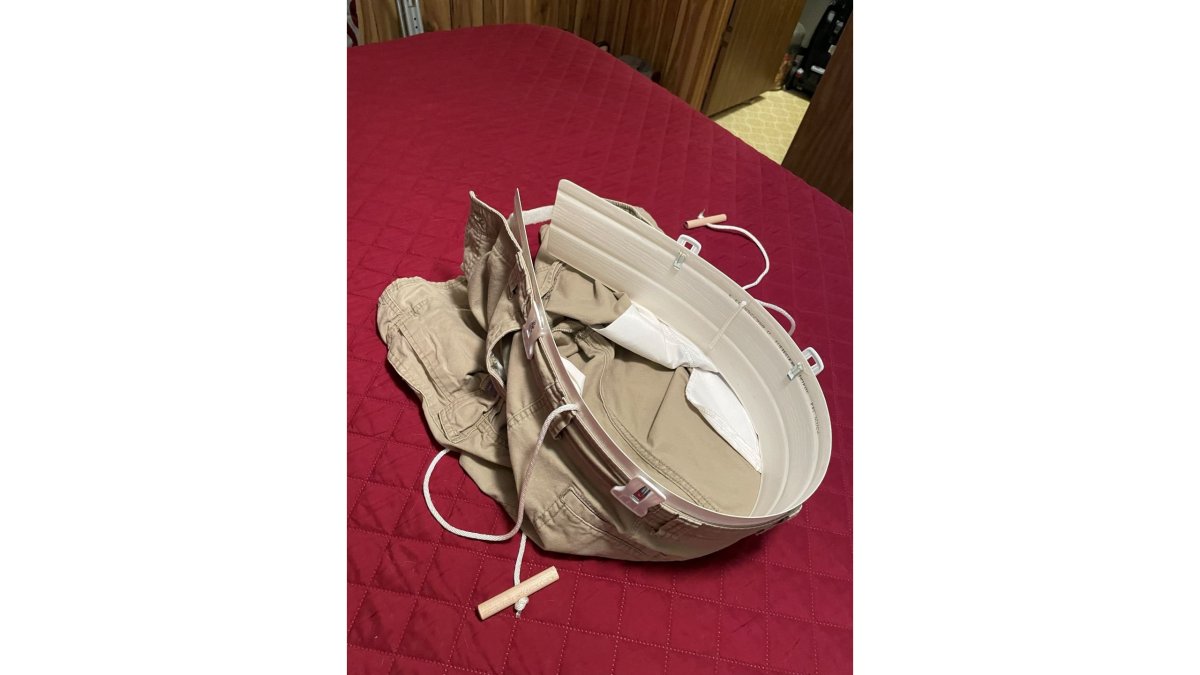
Lower-garment aids are the least known and often the most useful. Pants Aid is a lower-garment dressing aid built for exactly this problem, helping you step into pants and pull them up without bending or straining.
Best For Anyone who finds bending to pull up pants the most painful part of the morning. A lower-garment aid removes that movement entirely, so you can dress while seated or lying down.
Clothes to Wear With Back Pain: What Makes Dressing Easier
Clothes to wear with back pain should be loose, soft, and free of complicated fasteners. The right wardrobe can cut dressing time in half.
Look for these features:
Elastic waistbands that pull on without zippers or belts.
Loose fits that slide over your body instead of clinging.
Pullover tops instead of button-down shirts.
Avoid buttons, snaps, tiny zippers, and tight cuffs, which force fine finger work and extra twisting. Skirts and loose dresses are also good because they step on in one motion.
Key Takeaway The single biggest wardrobe change you can make is switching to elastic-waist pants. It removes buttons, zippers, and belts from your morning in one move.
Getting Dressed After Back Surgery: What Changes
Getting dressed after back surgery follows the same rules as general back pain, but with stricter limits. Your surgeon and physical therapist set the real boundaries, so follow their instructions first. Here's what typically changes in the early weeks.
Post-Surgical Precautions: What Typically Changes
Most surgeons limit forward bending and twisting for a set period after back surgery, commonly avoiding bending at the waist, lifting more than a light object, and twisting the torso for several weeks.
In the early weeks:
Follow your bending and lifting restrictions exactly. Do not test your limits to see if you can bend yet.
Use aids from day one. Don't wait until you're struggling to bring in a reacher, sock aid, or lower-garment aid.
Sit for everything. Dress seated or lying down, even for socks and shoes.
After upper back or neck surgery, raising your arms overhead may be limited, choose front-opening shirts and ask for help with pullovers. After lower back surgery, bending to reach your feet is the main risk, so use a sock aid and long-handled shoehorn.
Setting Up Your Home for Safer Dressing
A few home changes make dressing safer after surgery:
Put a stable chair with armrests beside your bed and in the bathroom.
Store the clothes you wear most at waist height so you don't reach overhead or bend low.
Add a nightlight so you can see the floor.
How a Caregiver Can Help Without Causing Strain
Caregivers can help most by laying out clothes, checking the floor is clear, and standing by during the hardest steps. Let the person dress themselves where they can. Independence matters as much as safety.
When you do help, avoid pulling or twisting the person. Instead:
Hand items to the person rather than reaching across them.
Let the person sit and guide their own limbs into clothing while you support the garment.
Use a gait belt if you have been trained to use one, and follow the instructions from the physical therapist.
When to Stop and Call Your Surgeon
Stop and rest if you feel sharp pain, dizziness, numbness spreading down a leg, or new or worsening weakness. Call your surgeon's office with questions about restrictions, increasing pain, or uncertainty about a movement. Recovery is not a straight line, keep your setup in place and use it every time, not just on bad days.
Watch Out Do not push through sharp pain or new numbness to finish dressing. These are signals to pause and check in with your surgeon, not to test your limits.
Pro Tip Ask your physical or occupational therapist to watch you dress once before you go home. They can point out movements that break your restrictions and suggest aids that match your surgery.
When to Stop, Ask for Help, and Set Up Your Home
Stop and rest if you feel sharp pain, dizziness, or numbness spreading down a leg, signals to check in with your doctor, not push through.
Ask for help when:
You feel unsteady on your feet, even while seated.
An item is out of reach and getting it means bending or twisting.
You are exhausted before the routine is finished.
A few home changes make dressing safer:
Put a stable chair beside your bed and in the bathroom.
Store the clothes you wear most at waist height.
Add a nightlight so you can see the floor.
Caregivers can help most by laying out clothes, checking the floor is clear, and standing by during the hardest steps. Let the person dress themselves where they can. Independence matters as much as safety.
Frequently Asked Questions
What should you wear when your back hurts?
Choose loose clothing with an elastic waistband, soft fabrics, and no buttons, snaps, or zippers at the back. Pull-on pants, skirts, and dresses let you dress without twisting or bending forward. Slip-on shoes or shoes with a shoehorn reduce the need to reach your feet. Avoid tight waistbands and anything that requires lifting your arms overhead or bending to fasten. Laying clothes out the night before also removes extra reaching and decision-making during a painful morning.
What dressing aids for back pain can help with getting dressed?
A reacher helps you pick up clothes and pull up underwear or pants without bending. A sock aid lets you put on socks while seated, and a long-handled shoehorn reduces reaching to your feet. A lower-garment dressing aid helps you step into pants without straining. Finger loops or thumb loops on zippers make fasteners easier to grip. Choose aids that match your hand strength and balance, and practice with them while seated on a stable chair before relying on them alone.
How do you get dressed safely after back surgery?
Follow your surgeon's and physical therapist's instructions first, since restrictions vary by procedure. In general, dress while seated on a firm bed or stable chair, lay out clothes within easy reach, and dress the affected or painful side first. Avoid bending, twisting, and lifting both legs at once. Use a reacher, sock aid, and shoehorn to limit reaching. Ask for help with socks, shoes, or back-fastening garments in the early weeks, and stop any movement that causes sharp pain.
When should you ask someone for help getting dressed with back pain?
Ask for help if you feel unsteady, dizzy, or at risk of falling, or if dressing causes sharp or radiating pain. Also ask for assistance if you cannot reach your feet, fasten garments, or stand safely on your own. A caregiver can steady you, hand you clothes, and help with socks and shoes. If pain is worsening or you notice new weakness or numbness, contact your clinician before continuing your usual routine.
Back pain turns a simple morning routine into a daily challenge, and that challenge wears on you over time. Pants Aid was built to take the hardest part out of it: bending to pull up pants. Our lower-garment dressing aid helps you step into clothes without strain, so you can dress seated or lying down. It comes in three sizes, with custom sizing available on request. Get started with Pants Aid and make getting dressed the easiest part of your day.

Comments