How an Underwear Dressing Device Restores Independence
- william vanacore
- 1 day ago
- 5 min read

Updated: 6 hours ago
Getting dressed should not require giving up privacy or asking for help with an intimate task. Yet when arthritis, balance concerns, limited range of motion, surgery recovery, or a disability makes bending and reaching difficult, putting on underwear can become one of the hardest parts of the morning.
An underwear dressing device is designed to make that moment more manageable. Rather than forcing someone to wrestle with a bunched-up waistband, the right device holds the garment open and ready, so both feet can be placed inside before the garment is pulled upward. It is a small change in the routine, but for many people it means less strain, less embarrassment, and more control over their day.
Why underwear is uniquely difficult to put on
Lower-body dressing asks a lot of the body at once. A person may need to bend forward, balance on one foot, grip a small waistband, guide a foot through an opening, and pull fabric up from the floor. When hand strength, flexibility, coordination, or balance is limited, any one of those movements can turn into a barrier.
Underwear can be especially challenging because the waistband is soft and collapses easily. It may twist, roll, or slip away while someone is trying to position a foot. For a caregiver, the task can also become physically awkward and emotionally sensitive. Even when help is offered with kindness, many adults want to preserve as much independence as possible.
A purpose-built dressing aid addresses the problem at its source: keeping the waistband open. Instead of trying to reach farther or move faster, the user starts with a stable, accessible opening.
How an underwear dressing device works

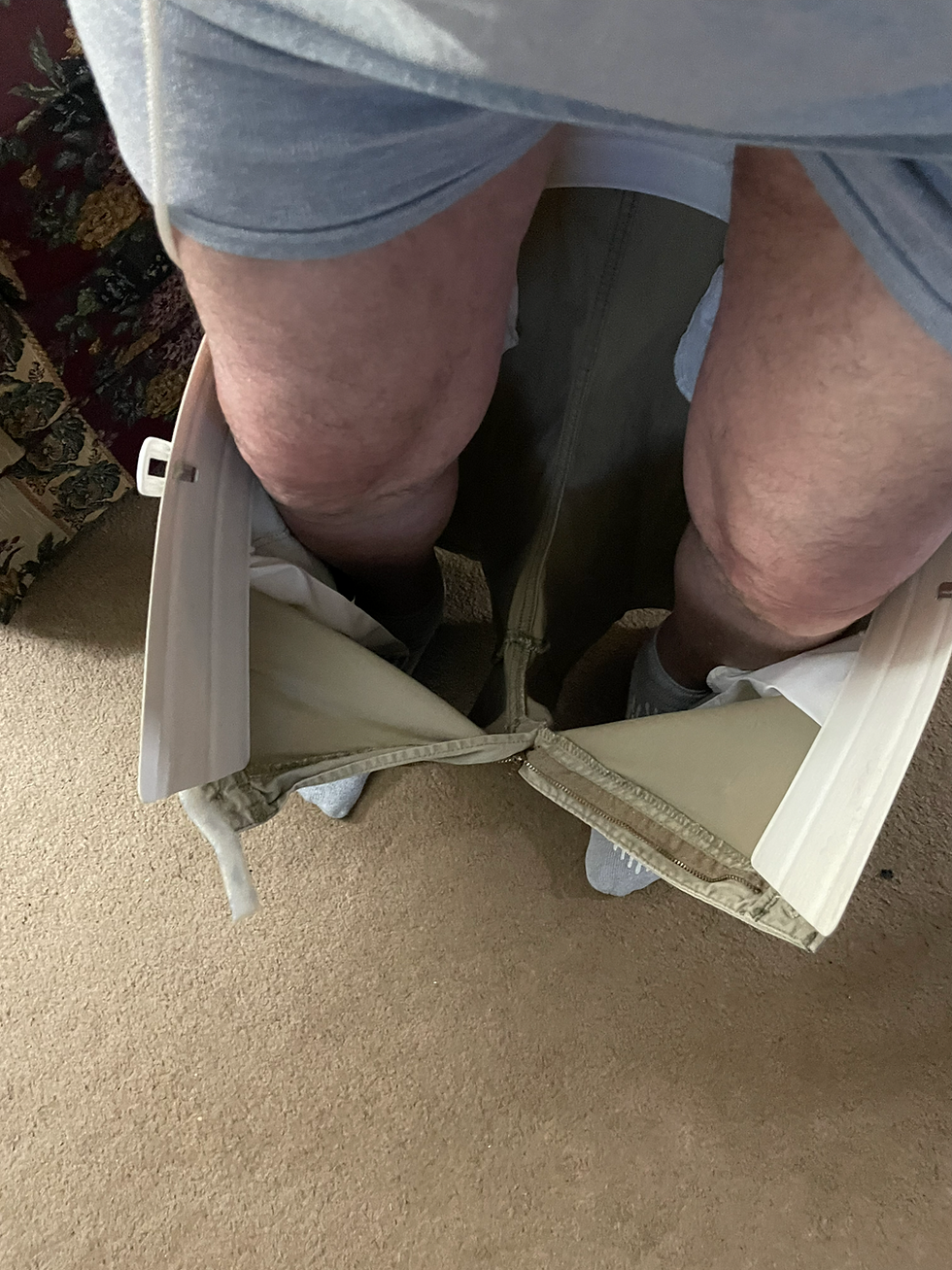
A belt-style device such as the Pants Aid Device uses clips to secure the waistband of underwear or another lower garment. Its adjustable structure expands to hold the garment fully open. Handles give the user a more secure place to hold while positioning the garment and bringing it upward.
The process is straightforward. Attach the garment’s waistband to the clips, open it wide enough for both feet, and set it on the floor or another stable surface. Step into the garment with both feet. Then use the handles and the garment itself to guide it up the legs and into place.
This approach matters because it removes the most frustrating first step: trying to find and hold open two leg openings while bent over. With the waistband already spread open, the user can focus on getting both feet in safely and comfortably.
The device is lightweight, so it is easier to handle than bulky hard-shell options. Its adjustable expansion also helps it work with a range of waistband sizes rather than requiring the user to force a garment into a fixed frame. Once a person learns the routine, setup can become a familiar part of getting dressed instead of another obstacle to solve.
Who can benefit from an underwear dressing aid?
The answer depends less on a diagnosis than on the movements that feel difficult. Someone may benefit if bending to the floor causes pain, if standing on one leg feels unsafe, if their hands cannot easily pinch and hold fabric, or if recovery restrictions limit movement.
Adults with arthritis may appreciate avoiding repeated gripping and twisting. People living with reduced mobility, paralysis, neurological conditions, or chronic pain may find that a held-open waistband makes lower-body dressing more realistic to do alone. After hip, knee, back, abdominal, or shoulder surgery, a dressing aid may help a person work within movement restrictions while they recover.
It can also help seniors who want to remain independent at home but have started needing occasional assistance with clothing. For caregivers and family members, the benefit is not only fewer hands-on dressing tasks. It can be the relief of seeing a loved one reclaim a private routine on their own terms.
Children and teens with physical limitations may benefit as well, provided the device, garment size, and level of supervision are appropriate. Independence is learned through repeated opportunities. A tool that makes a daily task achievable can support confidence alongside practical ability.
What to look for in an underwear dressing device
Not every dressing aid solves the same problem. Some are designed primarily for socks. Others use long sticks or hooks that require reaching, coordination, and enough grip strength to manipulate the garment. Suspender-style systems can help lift clothing but may not hold a soft waistband completely open at the start.
For underwear and similar lower garments, look first at the opening. A device should keep the waistband wide enough that the user can place both feet inside without fighting the fabric. That is the feature that changes the task from a balancing act into a more controlled sequence.
Clips should be simple to attach and firm enough to hold the waistband during positioning. Handles should offer a comfortable grip and give the user leverage without requiring a tight pinch. Weight matters too. A device that is too heavy or cumbersome can create a new problem for someone with weak hands, shoulder limitations, or fatigue.
Adjustability is another practical consideration. Underwear, shorts, pajama bottoms, and pants vary in waistband width and stretch. An adaptable device can be more useful across a daily wardrobe, although heavier pants or very tight garments may still require more effort to pull up. The best tool does not promise that every garment will feel effortless. It makes the hardest part of the process more manageable.
Using the device safely and comfortably
A dressing aid supports independence, but safe setup still matters. Begin in a stable position. Some people prefer to sit in a sturdy chair while attaching the garment and placing their feet. Others can use the device from a standing position with a counter, grab bar, or another stable surface nearby. The right choice depends on balance, strength, and any guidance from a healthcare professional.
Wear footwear or use a non-slip floor surface if that is appropriate for the person’s routine. Avoid rushing, especially during the first few uses. It may take a little practice to find the waistband placement that keeps the garment open evenly and to learn the most comfortable sequence for pulling it upward.
If a person has post-surgical precautions, frequent falls, severe pain, or difficulty transferring from sitting to standing, they should follow the recommendations of their doctor, occupational therapist, or physical therapist. A device can reduce reaching and strain, but it should not be used to push through pain or ignore recovery instructions.
Choosing garments that work well
Most underwear with a flexible waistband is a natural fit for this type of aid. Soft cotton briefs, boxer briefs, underwear with wider waistbands, pajama bottoms, lounge pants, and many elastic-waist shorts may be easier to manage than stiff or highly fitted clothing.
Very narrow, delicate, slippery, or extremely tight waistbands may require more care when attaching clips. That does not mean the device cannot help, but the result can vary by garment. Starting with familiar, comfortable underwear gives a new user the best chance to build confidence quickly.

Independence is the real benefit
It is easy to describe an adaptive dressing tool in terms of clips, handles, and adjustable bands. Those features matter because they create a practical solution. But the deeper value is what they protect: the ability to manage personal care without unnecessary assistance.
For someone who has begun planning their day around when a spouse, adult child, aide, or caregiver is available, dressing independently can feel like a meaningful return of freedom. For caregivers, it can reduce the pressure of a task that is often physically demanding and deeply personal. Less hands-on help can leave more room for companionship, conversation, and support in the ways that matter most.
The goal is not perfection on the first try. The goal is a routine that feels safer, more comfortable, and more private than before. With a simple tool, the right garment, and a little practice, getting dressed can become one more part of the day that belongs to the person doing it.


Comments