Can Pants Clips Prevent Falls While Dressing?
- william vanacore
- Aug 14
- 5 min read


Lower-body dressing is one of the moments when a small loss of balance can become a serious problem. Can pants clips prevent falls? They can help reduce one common source of risk: bending, twisting, reaching, and trying to hold a waistband open while standing on one foot. But clips alone are not fall prevention. Used as part of a safer dressing routine, they can make getting dressed feel more stable, manageable, and private.
For many people with arthritis, limited mobility, weakness after surgery, balance concerns, or a disability, the hardest part is not pulling pants up. It is getting both feet into underwear, pants, or shorts without dropping the garment, losing balance, or needing someone else to step in. The right dressing aid can remove several of those difficult movements at once.

Why putting on pants can create a fall risk
Getting dressed often involves movements that are easy to overlook until they become difficult. A person may bend toward the floor to find a pant leg, lift one foot while standing, twist to reach behind their body, or repeatedly stoop after the waistband collapses. Each movement can shift weight away from a stable position.
This risk can be greater first thing in the morning, when pain, stiffness, dizziness, or fatigue may be more noticeable. It can also increase after hip, knee, back, or abdominal surgery, when bending and twisting may be restricted or uncomfortable. Thick socks, slippery floors, poorly fitted footwear, and loose rugs can make a challenging task even less forgiving.
The goal is not simply to finish dressing faster. It is to create a routine where the garment stays where it needs to be, the person can remain supported, and each movement is deliberate rather than rushed.
Can pants clips prevent falls during dressing?
Pants clips can contribute to safer dressing when they hold a garment open and reduce the need to bend down, balance on one leg, or chase a collapsing waistband. That is especially useful for underwear and other lower garments that tend to fold inward as soon as a person tries to step in.
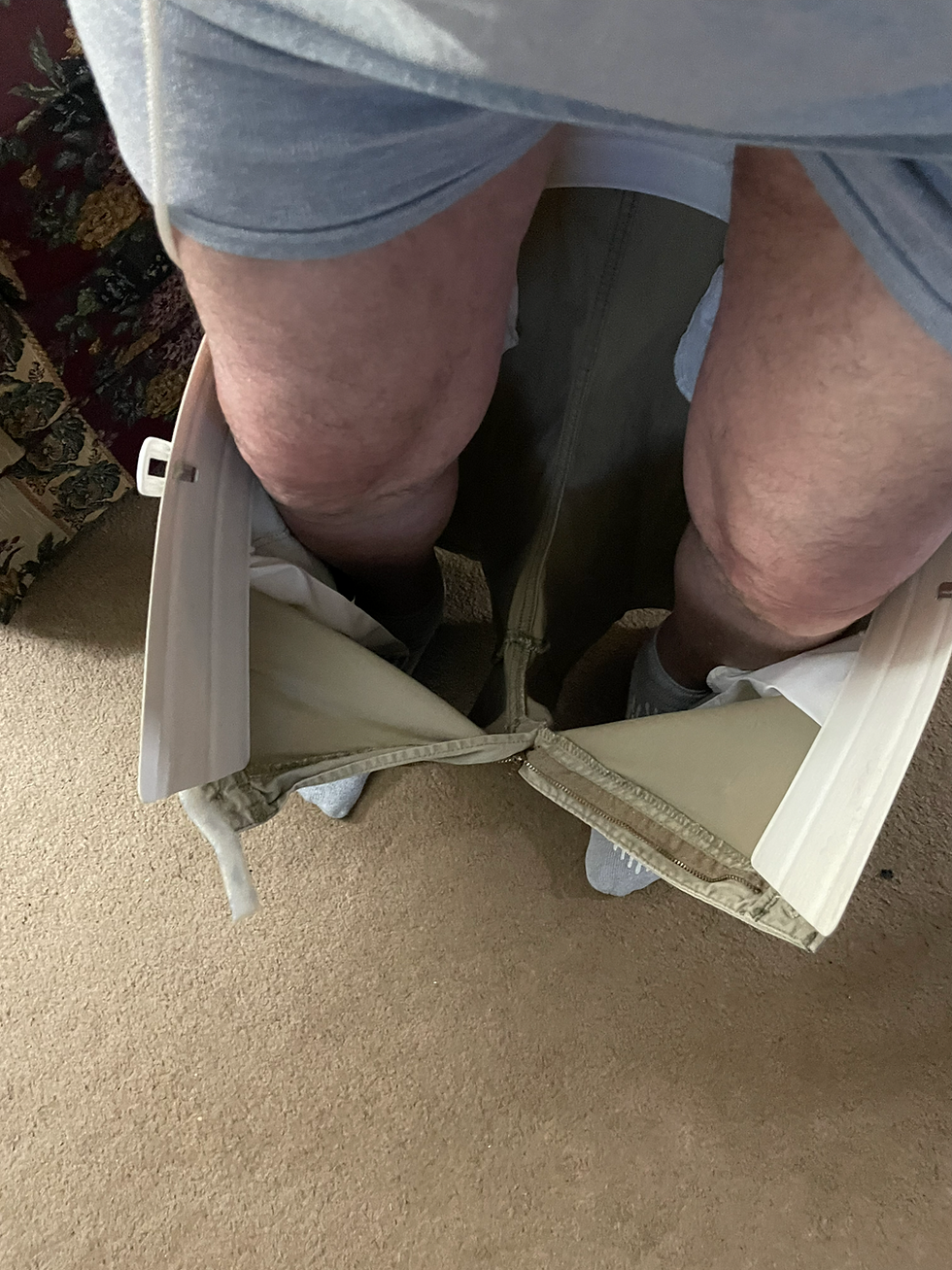
A clip-based dressing aid works by securing the waistband at points that keep the opening wide. With the garment held open, the user can place both feet into the leg openings before pulling the garment upward. This changes the task from a balancing act into a more controlled sequence.
That distinction matters. A device with clips is not a substitute for a walker, grab bar, caregiver support, physical therapy, or medical guidance when those are needed. It cannot eliminate fall risk caused by severe weakness, fainting, medication side effects, poor vision, or an unsafe home environment. What it can do is remove a practical barrier that causes many people to overreach, twist, or stand unsupported while dressing.
For someone who can sit safely in a sturdy chair and follow a steady sequence, pants clips may be one useful part of a lower-risk routine. For someone who has fallen recently, feels dizzy when standing, or cannot safely transfer from bed or chair, a clinician or therapist should help determine the safest approach.
What makes a clip-based dressing aid helpful
The benefit is not merely that a clip grips fabric. The better question is whether the aid keeps the waistband fully open long enough for the user to get both feet in without strain. A narrow opening or a garment that slips loose can bring back the same bending and frustration the device was meant to avoid.
A well-designed aid should be lightweight enough to handle without adding fatigue. It should also be adjustable, so the opening can accommodate different waistbands and different types of lower garments. Easy-to-grip handles matter, particularly for people with arthritis, reduced hand strength, numbness, or limited finger dexterity.
The Pants Aid Device is designed around this practical need. Its clips hold the waistband open while its adjustable belt-style design and handles support a simpler, more controlled way to put on underwear and other lower garments. Instead of relying on a long stick, complex hardware, or another person’s hands, the user can focus on placing their feet and pulling the garment up at their own pace.
Still, the garment itself affects results. Very delicate fabric, extremely thick elastic, oversized pants, or garments with unusual shapes may require a little practice. An aid should make dressing easier, not force the user to fight the fabric.

A safer way to use pants clips
The safest routine usually begins seated, not standing. Choose a firm chair with a stable back and, if possible, arms that can help with a controlled sit-to-stand. Avoid rolling office chairs, soft couches that are difficult to rise from, and the edge of a bed if it is too high, too low, or unstable.
Attach the clips to the waistband while seated. Check that the garment is spread evenly and that both leg openings are visible. Place one foot and then the other into the garment without rushing. Once both feet are through, pull the garment up toward the knees while remaining seated whenever possible.
Only stand when you are ready, your feet are positioned securely, and you have a stable surface or prescribed mobility aid within reach. Rise slowly. Pull the garment the rest of the way up with both feet planted, rather than lifting one foot to adjust fabric. If you feel unsteady, sit back down and reset.
A few simple habits can make this sequence safer:
Keep the floor dry, clear, and free of throw rugs or clutter.
Wear non-slip footwear or stable socks when appropriate for your routine.
Place the chair near a sturdy support, but do not rely on towel bars, light furniture, or unstable counters.
Keep the dressing aid, garments, and mobility device within easy reach before you begin.
Stop if you feel dizzy, unusually weak, short of breath, or in pain.
These details may seem small, but falls often happen when several small challenges occur at the same time.
When pants clips are not enough
Some situations require more than a dressing aid. If a person has new balance changes, repeated near-falls, sudden weakness, confusion, or dizziness, the priority is to speak with a healthcare professional. Changes in medication, blood pressure, vision, or strength can affect safety in ways no garment aid can solve.
Caregivers should also watch for signs that a loved one is adapting in unsafe ways, such as holding onto a dresser that moves, hopping while pulling up pants, or refusing to sit because they feel embarrassed about needing help. The desire for privacy is deeply understandable. The answer should be a setup that protects dignity without asking the person to take unnecessary risks.
Occupational therapists are especially helpful for assessing the full dressing routine. They can recommend chair height, transfer strategies, grab bars, reachers, sock aids, and techniques that fit a person’s diagnosis and home. A clip-based aid may be part of that plan, but it should fit the individual rather than become a one-size-fits-all answer.
Independence is safer when it is set up well
The most meaningful benefit of pants clips is often confidence. When a person knows the waistband will stay open, they may no longer have to bend painfully, call for help with an intimate task, or rush through dressing because they are frustrated. That can make mornings calmer for both the individual and the caregiver.
Safe independence does not mean doing everything without support. It means having the right support in place so a person can do as much as possible with comfort, control, and privacy. If lower-body dressing has become a daily struggle, a stable seated routine and a device that keeps the garment open can be a practical next step toward feeling secure again.


Comments