7 Waistband Clip Alternatives for Easier Dressing
- william vanacore
- Aug 28
- 6 min read


A waistband that slips closed before both feet are in can turn a private, ordinary task into a frustrating struggle. For people looking into waistband clip alternatives, the real question is not simply which tool holds fabric. It is which approach makes underwear, pants, shorts, or other lower garments easier to put on while protecting balance, comfort, and personal dignity.
Clips can be useful, particularly when someone has enough hand control to attach and release them. But they are not the best fit for every body, garment, or mobility challenge. Some people need more reach. Others need a waistband held wider open. And for many, the safest option is the one that reduces bending, twisting, gripping, and the need to ask another person for help.
Why waistband clips may not solve the whole problem
Waistband clips are often used to keep part of a garment from folding or closing while someone steps in. Their main limitation is that they usually secure only a small area of fabric. If the rest of the waistband collapses inward, the user may still need to bend down, use both hands at once, or balance on one foot to find the second leg opening.
They can also be difficult for someone with arthritis, tremors, limited finger strength, numbness, or one-sided weakness. A small spring clip requires pinching, positioning, and releasing at the right moment. That may be manageable on a good day but feel impossible after surgery, during fatigue, or when pain flares.
The garment matters, too. Thick elastic, delicate fabric, wide waistbands, and certain underwear styles do not always cooperate with clips. A device that works well on one pair of shorts may snag, slide, or leave too little opening on another garment.
7 waistband clip alternatives to consider
The right dressing aid depends on how much support a person needs and where the difficulty occurs. Some tools help with reaching the floor. Others help guide fabric over the feet. A few are designed specifically to hold a lower garment open from the beginning.
1. A full-waistband dressing aid

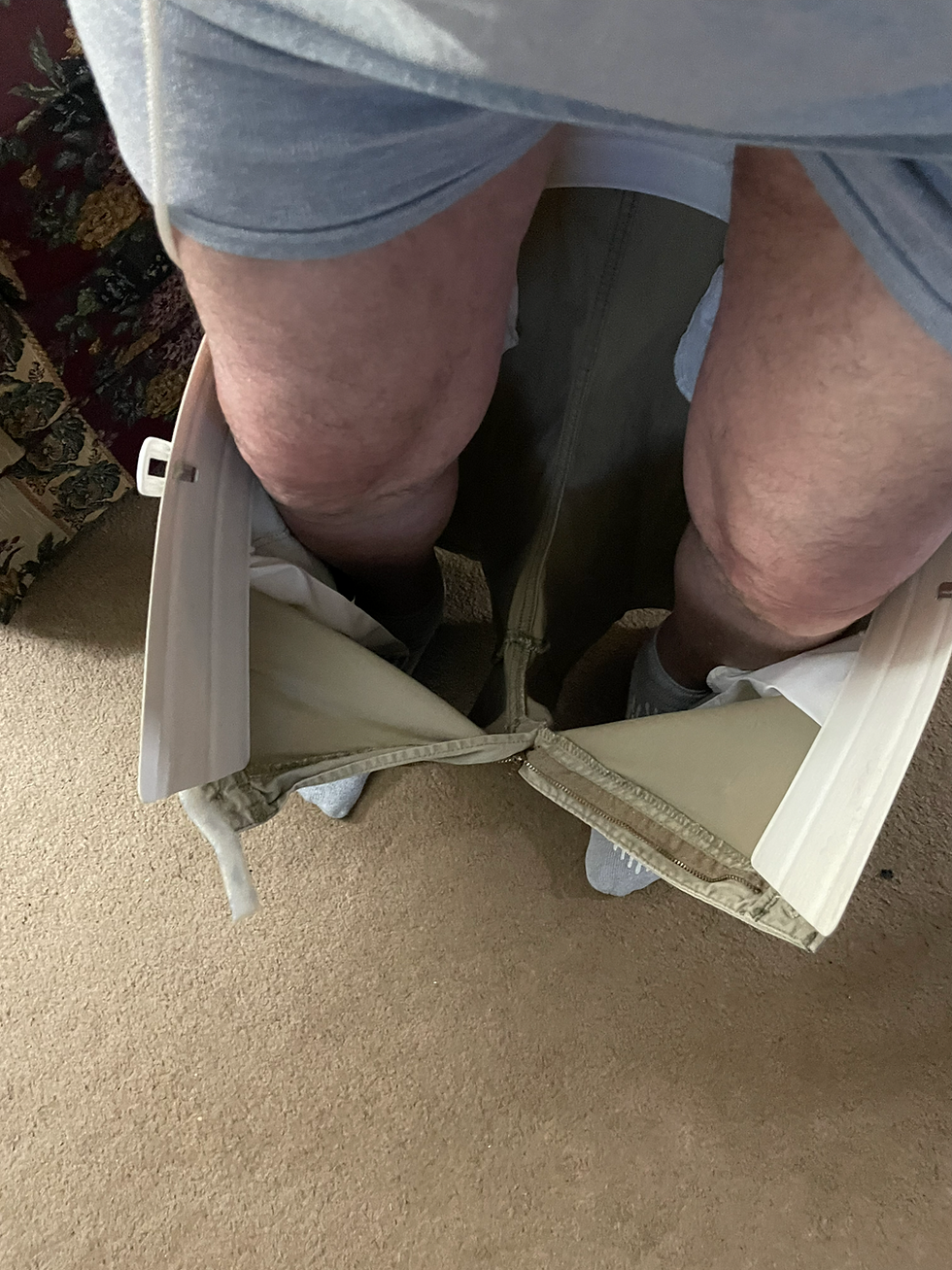
A full-waistband dressing aid is designed to hold the entire waistband open, rather than gripping one small section. The user attaches the garment to the aid, places both feet through the leg openings, and then pulls the garment upward using handles or straps.
This style can be especially helpful for people who cannot safely bend down or stand on one leg. Keeping the waistband expanded gives both feet a clearer path into the garment and reduces the fumbling that often happens when fabric twists or closes prematurely.
The Pants Aid Device uses an adjustable belt-style design with clips and handles to support this process. It is intended to hold underwear and other lower garments open while allowing the user to pull upward with less strain. For someone whose biggest obstacle is getting both legs into a garment independently, full-waistband support is often more practical than separate clips.
2. A dressing stick
A dressing stick is a long, lightweight tool with hooks or push-pull ends. It can help guide a waistband, pull a strap into place, or move fabric without requiring the user to reach all the way down.
This can be a good choice for someone with limited hip motion or back pain who still has steady hand control and can manage the garment once it is near the feet. It is generally simple and inexpensive.
The trade-off is that a dressing stick does not hold the waistband open. The user must still position the garment and manipulate the fabric, which can be challenging for people with weak grip, poor coordination, or significant balance limitations.
3. A reacher or grabber
A reacher can pick up clothing from the floor, grasp a waistband, and pull fabric closer without bending. It is useful well beyond dressing, making it a familiar tool for many people recovering from surgery or living with reduced mobility.
For lower-body dressing, a reacher works best when paired with enough upper-body strength and hand coordination to control the garment. It may help bring pants or underwear within reach, but it does not organize the leg openings or prevent the waistband from folding in on itself.
A reacher is often a helpful companion tool, not a complete solution for someone who needs hands-free or wide-open waistband support.
4. A sock aid with a separate pants tool
Sock aids are made to help a person put on socks without bending deeply. While they do not address underwear or pants directly, they can reduce the total effort involved in getting dressed from the waist down.
For someone who can manage pants with a stick or reacher but becomes exhausted by socks, combining tools may make morning dressing more manageable. However, a collection of separate aids can create more steps, more pieces to keep track of, and more opportunities for frustration.
This approach fits people with mild to moderate limitations who can safely sit, reach somewhat, and follow several steps. It may be less suitable for a person who needs one straightforward method for getting underwear or pants on with minimal handling.
5. Suspender-style pull-up systems
Some lower-body dressing systems use straps or suspenders attached to the garment. The user may pull the straps upward after stepping into the clothing, helping lift pants or underwear without reaching all the way down.
These systems can provide leverage for people who have trouble grasping a waistband. They may work well with certain pants styles and for users who are comfortable managing straps around the body.
Still, straps do not necessarily keep the waistband fully open before stepping in. They can also add setup time and may feel cumbersome under clothing. People with shoulder pain, limited arm range, or difficulty managing buckles may find them less comfortable for everyday use.
6. Adaptive clothing with easier closures
Adaptive pants and underwear may include side openings, Velcro-style closures, elastic panels, or roomy cuts intended to make dressing simpler. For some people, changing the garment is the best answer. Elastic-waist pants, for example, can eliminate buttons and zippers that require fine finger movement.
The limitation is that adaptive clothing does not always address the challenge of getting both feet through the garment or pulling it up from the floor. It may also cost more than standard clothing and offer fewer style, fabric, or fit choices.
This option makes sense when closures are the main barrier. When bending, balance, and waistband positioning are the bigger issues, an assistive dressing device may still be needed.
7. Caregiver assistance
Hands-on help from a spouse, family member, home aide, or care professional can make dressing faster and safer when mobility is severely limited. There are situations where assistance is the appropriate choice, especially after a major procedure, during a period of instability, or when a person cannot safely transfer or stand alone.
But help should not be the automatic answer when a person can participate safely with the right tool. Needing someone else to handle underwear or pants can feel deeply personal. A dressing aid that restores even part of that routine can reduce embarrassment and give both the individual and caregiver more breathing room.
How to choose the right option
Start with the moment dressing becomes difficult. If the issue is picking clothing up, a reacher may be enough. If it is reaching the feet, a dressing stick can help. If buttons, zippers, or tight closures are the problem, adaptive clothing may be the better path.
If the garment closes before both feet can enter, or if bending and balancing create a safety concern, look for an aid that keeps the waistband broadly open. That design addresses the task at its most difficult point instead of asking the user to fight the fabric with limited reach or grip.
Also consider whether dressing happens seated, standing, or with a mix of both. A person with balance concerns should not have to stand on one foot, twist sharply, or rush through the process because a clip is slipping loose. The best tool should support a calm, repeatable routine that feels manageable on ordinary days, not just on days when strength and mobility are at their best.
Comfo
rt and dignity belong in the decision
Lower-body dressing is not a minor convenience issue. It affects how a person starts the day, whether they feel rushed or exposed, and how much control they have over their own routine. The best alternative is the one that reduces strain without adding a complicated system to learn.
Give the tool a fair trial with the garments worn most often, not just one easy pair of loose pants. When the right support keeps clothing open, reachable, and easier to pull into place, getting dressed can become a private routine again - one that feels more comfortable, safer, and more like your own.


Comments